What makes a good website?
A good website is built on an understanding of the people who use it and its structure comes from research, not from a template. Its navigation follows the journeys visitors actually take, responding to whatever device they arrive on. How it looks may be a matter of taste, but the structure always answers to evidence.
How has AI changed web design?
The order of a design process used to be decided by cost. You wireframed before you comped, and comped before you built, so that the expensive step only ever ran on a settled answer. Building a working version is no longer the expensive step, so we order the work by risk instead: whichever assumption would hurt most if it turns out wrong gets tested first, at whatever fidelity that question needs.
AI has made the making cheaper. It has not made the deciding any easier, which is why the phases below are the ones they always were, run in a different order and at a different speed.
How do you build a website?
- 01
Understand what already exists
When redesigning a site that already exists, most of the evidence was gathered years ago: the support inbox, site search logs, Search Console queries, every page of the current site and what it was for. Where you have no site yet there are no logs to read, and the evidence comes from your enquiries and sales conversations, from competitors' sites, and from what the sector is already searching for. AI is what makes either practical: it clusters thousands of tickets, queries and search terms into the few things people keep asking for, and reads an existing site or a competitor's one page by page. We still decide what it all means.
- 02
Define the structure
The information architecture follows the journeys the research found, so the page a visitor needs next is one obvious step away. Naming matters as much as structure: a menu uses the visitor's words, not the department's. Wireframes make it walkable while rearranging is still cheap. This is probably the phase AI has changed least. A model can group topics, but it cannot tell you that two departments mean different things by the same word, and that is why the research still matters.
- 03
Explore more than one visual direction
The visual language is explored alongside the architecture rather than after it. Two or three directions stay alive at once, with several rounds of each, because a clickable version is no longer the thing that has to be rationed. This is the change that matters most: a working prototype in the browser used to be the rung most projects never reached, and it now arrives while changing your mind is still cheap.
- 04
Test it with the people it is for
Where the budget permits it, participants who match your visitors attempt real tasks on the prototype, and what they do decides what the next round changes. When user testing is out of budget, the archetypes the research produced stand in: a person with a task, walked through the prototype step by step, looking for where they would stall. This is the step AI has not changed. A model can produce a plausible reaction to a screen, and plausible is not the same as observed.
- 05
Build, then refine
The front-end is built in broad strokes and refined from there, with detail and animation arriving once the shape is right. AI has widened what fits inside a budget, so features that would once have been cut for time are now affordable. That is a trap as much as a gift: each one is still something a visitor has to understand and someone has to maintain, so it earns its place or it stays out.
Designed around visitors
- Navigation written in the language visitors use
- Structure shaped by what visitors came to do
- Pages that answer the questions people actually arrive with
- One clear next step, on every page
Designed around the org chart
- Menus that mirror internal departments
- Copy that assumes the reader knows the jargon
- Every team gets its page, and no visitor finds theirs
- A homepage that lists everything, because nothing on it was ranked
Why does website design matter for conversion?
A website has a job: to sell, to book, to explain, or to reassure. Visitors arrive with a task, and the design either helps them finish it or gets in the way. A visitor who cannot find what they came for rarely complains about it. They leave.
The quieter half of the job is trust. Credibility gets judged in the first few seconds, and it gets judged from the design. Whether the pages hold together, whether they load quickly, whether they display and perform well on the phone in someone's hand. A site that stumbles on mobile is not a cosmetic problem. For most visitors the phone is the first screen they see, and often the only one.
Where we stand on Web Design
- 01Visitors judge a site by whether they finish the task they came for. Design clears that path or clutters it.
- 02Structure comes from research into real visitor journeys, not from whichever template looks the best.
- 03Many visitors arrive on a phone. How many of yours do is worth establishing before the design settles, not after.
- 04Accessibility and performance are design decisions, and both compound into search ranking and conversion.
- 05The date a site launches is usually set by its copy and images, not its design. When a project falls behind, the content is the reason more often than the designs are.
Work featuring Web Design



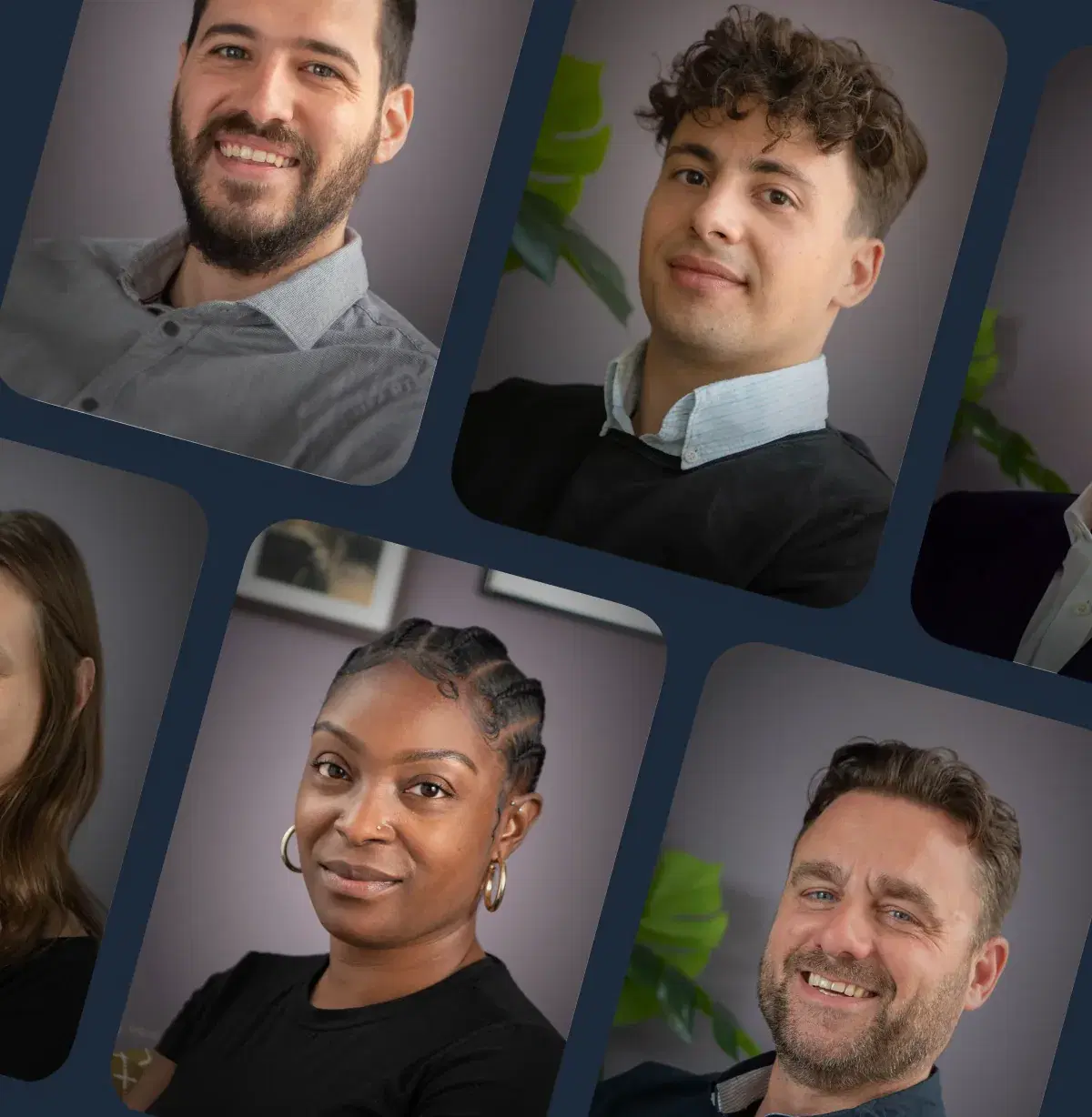

The London Practice
Psychotherapy Practice Website
A website for a London psychotherapy practice, built around finding the right practitioner.
Web DesignContent Management SystemBrand AuditDesktop ResearchPrototyping
What’s included in Web Design?
- Marketing & campaign sites
- Sites with one job, a launch, a campaign or a product story, carrying a visitor to a single measurable action.
- E-commerce & online stores
- Product, cart and checkout designed for the way people actually buy, with the payment and fulfilment realities built in.
- Information architecture
- What lives where, what it is called, and how a visitor moves between them.
- Responsive design
- What a visitor has within reach on each device, rather than the same content reflowed into a narrower column.
- Accessibility
- Contrast, keyboard routes, semantics and legible type decided in the design, not audited afterwards.
- SEO-aware design
- Semantic structure, a heading hierarchy that means something, and pages that load.
Final questions
How much does a website cost?
It depends on the scope, and we quote each site on its own. A focused campaign page and a multi-section corporate site are different undertakings. Working from Cape Town keeps our rates below those of comparable European and US studios. We set pricing against each client's budget, not a rate card, and cannot put a number on a site until we know what is in it, so the honest answer starts with a call.How long does a website design project take?
Most run four to eight weeks from kickoff to handover. A single-purpose campaign site sits at the short end; a larger site with research and prototyping behind it sits at the long end. The variable that actually moves the date is content. Sites whose copy and imagery already exist at the start move fastest.Do you design and also build websites?
Yes. Hominum is a design and development studio. One engagement can run from research and design through to a launched site: marketing sites, online stores, and custom content management among them. We always design with the build in mind. We do not draw what we cannot build properly.What is user-centred website design?
It means evidence about a site's visitors decides its structure, navigation and content. Who they are, what they came to do, and what they are holding while they do it. The alternative is to design from what an organisation already believes about its visitors, and hope the two match. Sometimes they do. It is a poor thing to leave to chance when it can be checked instead.