What is contextual research?
Contextual research is the practice of observing people in the environment where they work (office, home, shop floor or delivery route) to understand workflows, frustrations and opportunities that interviews alone miss. Because it studies behaviour where it happens, it captures the workarounds, interruptions and constraints people never think to mention.
Why observe users in context?
In a lab or a video call you see the product; in context you see everything competing with it. The phone call that interrupts the flow at its most fragile step. The spreadsheet kept open beside the system that was meant to replace it. The handwritten codes taped to the monitor because the software forgets them. None of this appears in a usability session, because none of it travels. It lives in the environment, and the environment stays behind when the participant joins your call.
Self-reported behaviour is edited behaviour. Not dishonestly: people describe their work the way it is supposed to go, smooth over the exceptions, and forget the small repairs they make a dozen times a day because repetition has made them invisible. But the exceptions and the repairs are where products win or lose, and the only reliable way to find them is to be there when they happen.
How is contextual research different from user interviews?
An interview is a conversation about work, held away from it: a person recalling, summarising and tidying what they do. Contextual research is observation of the work itself, with questions saved for the moments where what the person does diverges from what they said they do. Those divergences are the findings. The interview alone would have recorded the tidy version and missed the real one.
The other difference is evidence. An interview produces an account; a field visit produces artefacts: the annotated printout, the exported spreadsheet, the cheat sheet taped inside a cupboard door, the group chat where the real coordination happens. Artefacts are behaviour made durable, and they carry requirements nobody thinks to voice because nobody experiences them as requirements. They are how the work gets done.
How do you run a field study?
- 01
Plan the contexts
We decide which environments, roles and moments matter. A field study samples situations, not demographics, so a morning rush and a quiet Tuesday count as two different contexts even at the same desk.
- 02
Shadow real work
A researcher sits beside participants through their normal day, interfering as little as possible. Questions wait for the gaps. The point is to see the work as it is, not as it becomes when someone is explaining it.
- 03
Capture artefacts
We photograph the workarounds, collect the templates and cheat sheets, and record the environment itself (devices, screens, noise, interruptions) because all of it constrains what a design can assume.
- 04
Synthesise patterns
Observations from every visit are compared; what recurs across contexts becomes a theme, mapped to the opportunity it represents and ranked, so the study ends in decisions rather than a pile of field notes.
Where we stand on Contextual Research
- 01People describe the process as designed; observation reveals the process as practised.
- 02Being watched changes the work. People perform, but few can keep it up for long, which is why a visit is a day and not an hour.
- 03Access takes the longest: what you are allowed to watch is negotiated long before it is observed.
- 04A field study samples moments, not people. The same desk at Monday's rush and on a quiet Tuesday is two contexts, and one of them is where the product fails.
- 05Findings are patterns confirmed across contexts, not anecdotes from one desk.
Work featuring Contextual Research
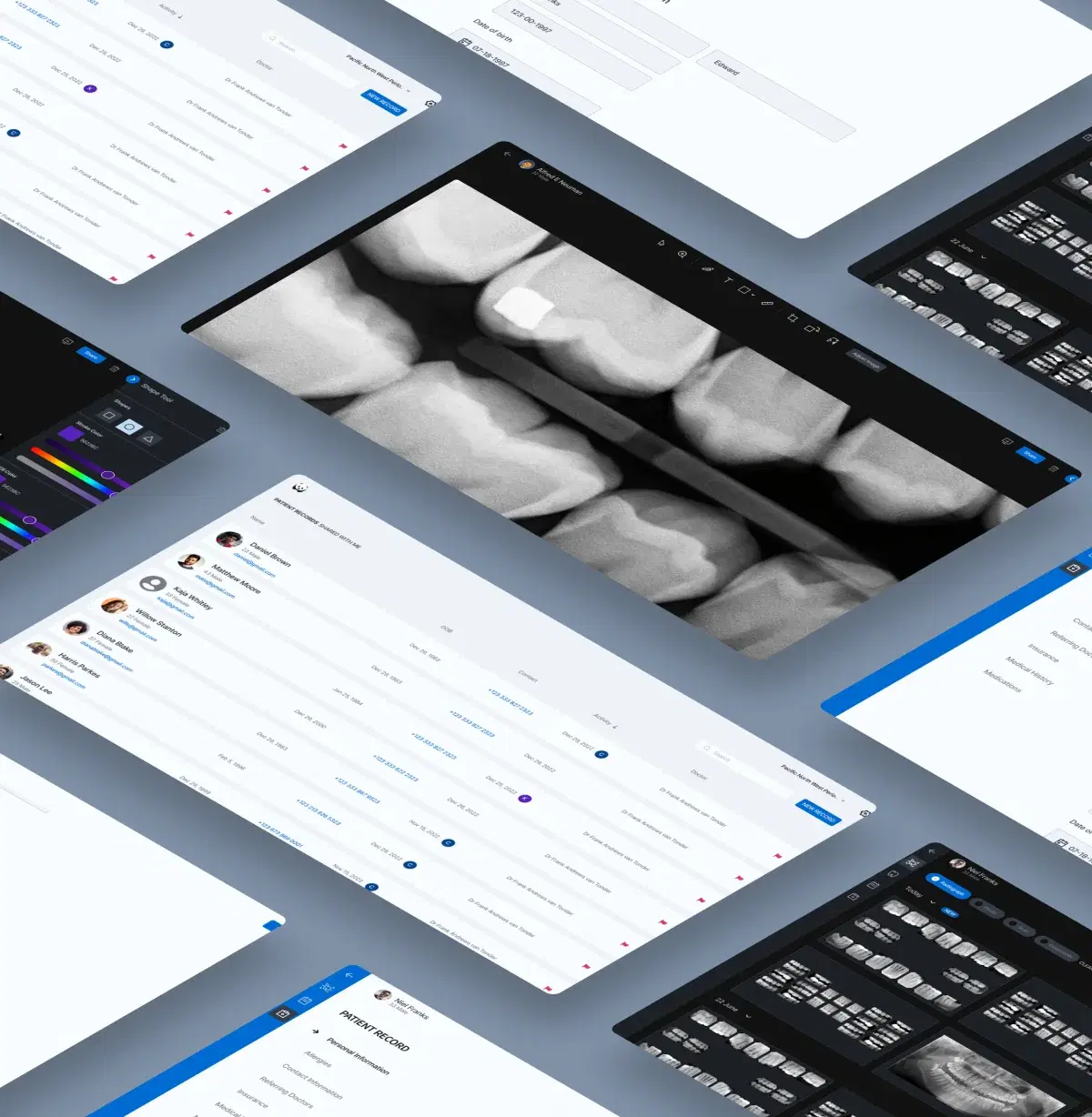

PANDA Dental
Clinical Imaging Software for Dental
Contextual research and product design for dental imaging, clinical notes and practice management.
Platforms & SaaSContextual Research


BillyGoat
Bill Consolidation and Splitting Tool
A marketing site and brand for a bill consolidation and splitting product.
Web DesignBrand IdentityContent DesignContextual ResearchDesktop Research
What’s included in Contextual Research?
- Field studies & shadowing
- A researcher beside people through a whole working day, rather than through a scripted task.
- Contextual inquiry
- Observation and interview together: the participant works, the researcher asks about what just happened.
- Artefact analysis
- Templates, printouts, spreadsheets and notes read for the requirements they encode.
- Environment & device audits
- The hardware, screen sizes, connectivity, noise and interruptions of the places a product will be used, recorded.
- Journey mapping
- The steps a person takes across channels and time, drawn with the pain points and the moments of decision on it.
- Personas & archetypes
- The recurring kinds of user the research found, written so a team can design for a named person rather than an average.
Final questions
What is an example of contextual research?
Take a dispatch centre: a researcher spends a morning beside a dispatcher, watching them juggle the official system and the group chat where the real coordination happens. No interview would have surfaced the second screen, because to the dispatcher it is not a workaround; it is how the job is done. That gap between the official process and the practised one is what contextual research exists to find.How long does a field study take?
A focused study (planning, a round of site visits and synthesis) typically fits inside two to four weeks. Studies that span multiple locations or roles sit at the longer end; a single-context study can run faster. The visits themselves are usually the shortest part; access and synthesis take the time.How many participants does contextual research need?
Fewer than most methods, because each visit yields far more than a session in a lab. The sample is built from contexts and roles rather than headcount: a handful of visits per context is usually enough for patterns to start repeating. That repetition is the signal that the study has found something real.Can contextual research be done remotely?
Partly. Screen-sharing sessions, diary studies and camera tours of a workspace approximate presence, and diary studies in particular capture moments no visit would catch. What remote formats lose is the periphery (the interruptions and the second screen), so where the environment itself is in question, in-person visits remain the stronger instrument.